Running a dumpster rental business isn’t just about trucks, dumpsters, and marketing. It’s also about dealing with cities, ordinances, enforcement, and situations no one talks about before you start.
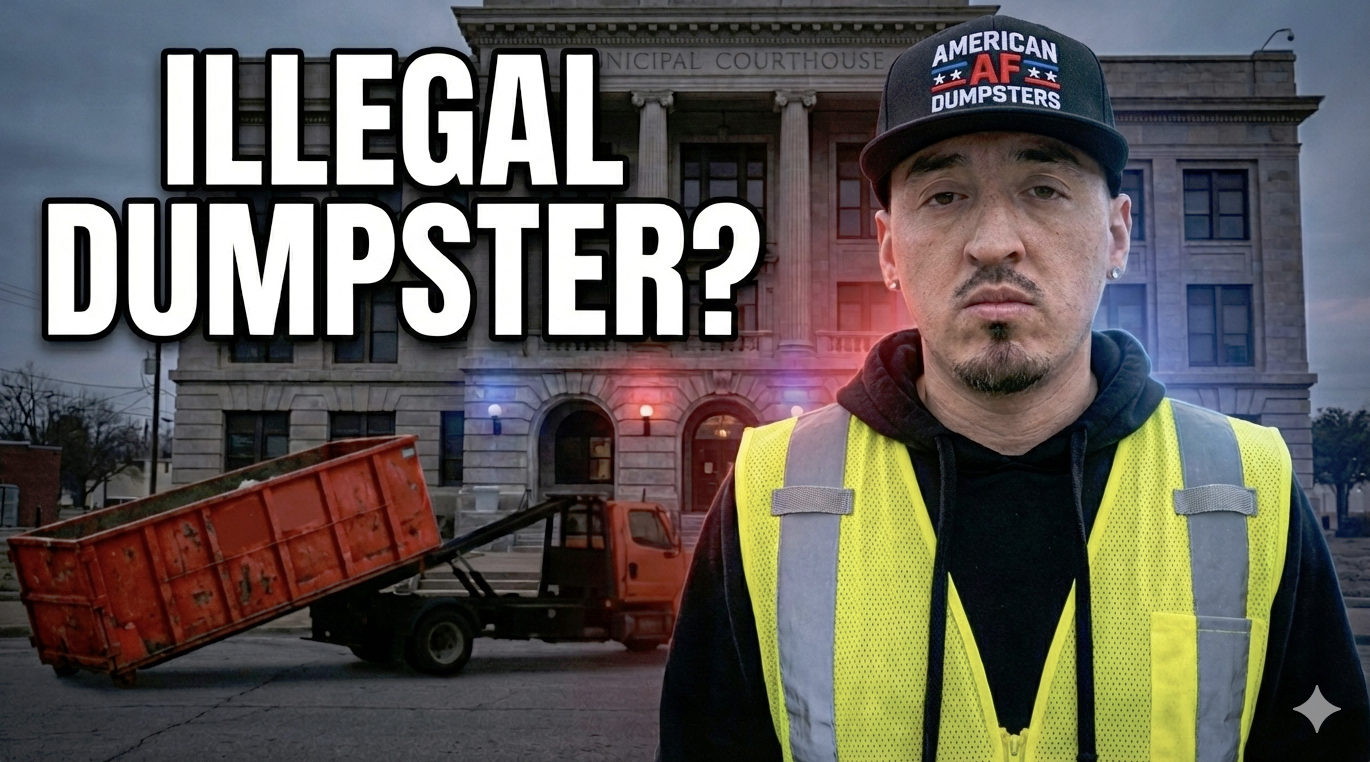
In this video, we take you inside a very real situation our company faced in Mesquite, Texas — where a dumpster was impounded from private property, a driver was issued a citation, and we had to walk through the municipal court process to resolve it.
This isn’t drama for clicks. This is the real-world side of the dumpster business that new owners need to understand before they scale.
What Happened: A Dumpster Was Impounded From Private Property
A dumpster was delivered inside the city of Mesquite. No warning was given. City trucks entered a customer’s private driveway, removed the dumpster, and impounded it.
We weren’t notified.
We didn’t get a call.
We found out because the customer called us asking where their dumpster went.
This wasn’t the first time, either.
Mesquite enforces an exclusive waste agreement, meaning property owners don’t get to freely choose who they do business with. In practice, that creates a monopoly-style environment where independent dumpster companies are targeted, regardless of whether the dumpster is on public or private property.
As a business owner, you need to understand that some cities will aggressively enforce ordinances without warning, even when the situation seems unreasonable.
The Ticket Problem: Who Gets Blamed?
When we went to retrieve the impounded dumpster, the city issued a citation — not to the person who placed the dumpster, but to the driver who picked it up.
Let that sink in.
No proof of who dropped it.
No citation at the time of placement.
No warning.
Just a ticket issued to whoever showed up to recover company property.
This is one of those moments where new business owners realize something important:
logic does not always matter in enforcement situations.
As an owner, that means:
- Your drivers may get tickets for situations they didn’t create
- You need policies in place for how citations are handled
- You need to protect your drivers and your company at the same time
In our case, we handled it at the company level. The citation wasn’t about money — it was about process, precedent, and principle.
Municipal Court: What Owners Should Expect
We went to Mesquite Municipal Court to handle the citation properly. The violation was classified as an ordinance violation, not a moving violation, but there was confusion even at the city level about how it would affect a driver’s record.
That’s another lesson for dumpster business owners:
Do not rely on phone explanations from city staff alone.
Always verify:
- What the citation actually is
- Whether it affects a driving record
- Whether deferred disposition is an option
- How long it stays on record
In this case, deferred disposition was offered. After payment and a waiting period, the violation disappears as if it never happened.
Still, the takeaway is clear — cities can and will create friction, and you need to be ready for it.
Why This Matters If You Want to Start a Dumpster Business
A lot of people focus on:
- How much dumpsters cost
- How much revenue a dumpster can make
- What software to use
Very few people talk about:
- City politics
- Exclusive waste agreements
- Enforcement inconsistencies
- How drivers are impacted
This video shows the side of the business that doesn’t show up in spreadsheets.
If you’re planning to grow, franchise, or operate across multiple cities, you need to research:
- Municipal codes
- Exclusive waste contracts
- Enforcement history
- Past lawsuits or challenges in that city
Ignoring this can cost you time, money, equipment, and momentum.
Operations Continue: The Business Doesn’t Stop
Despite the court visit and the citation, the day didn’t stop.
Dumpsters were delivered.
Dumpsters were picked up.
Routes were adjusted.
Tight placements were handled.
Customers were dealt with.
That’s another reality of this industry — problems don’t pause operations.
You still have:
- Drivers on the road
- Customers waiting
- Schedules to hit
- Equipment to manage
Good dumpster businesses don’t avoid problems. They absorb them and keep moving.
The Bigger Lesson for Owners
This video isn’t about complaining. It’s about awareness.
If you’re getting into the dumpster rental business, understand this:
- Cities don’t always play fair
- Ordinances can be vague and selectively enforced
- Your drivers need protection and clear policies
- You need to decide where you will and won’t operate
- Some markets are worth the fight, others aren’t
Every dumpster business eventually faces moments like this. The difference between companies that survive and companies that fold is how prepared the owner is.
Why We Show This on the American AF Dumpsters Channel
This channel exists to show the real dumpster business, not just the wins.
We show:
- Mistakes
- Enforcement issues
- Training moments
- Operational headaches
Because if you’re serious about starting a dumpster business, you need truth, not hype.
If you’re watching the videos and reading these blogs, you’re already ahead of most people who jump in blind.
Final Thought
Dumpster rentals can be a great business.
But it’s not “easy money.”
Cities, courts, drivers, customers, and logistics all collide — sometimes in the same day.
The goal isn’t to avoid problems.
The goal is to build a business that can handle them.