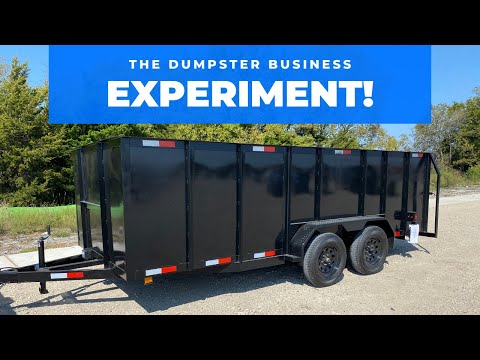
One of the most common questions I get from people starting a dumpster rental or dump trailer business is whether they need a DOT number in Texas. I have been asked this question hundreds of times, and the misinformation out there is unreal. Other YouTubers have posted videos saying a DOT number is required, and my comment section blew up with people telling me I was operating illegally. So I dug in, talked to a certified DOT compliance specialist, and here is what I found.
The Short Answer for Texas
In the state of Texas, if you are hauling your own dump trailer for your own business and you are not crossing state lines, you most likely do not need a DOT number. Texas does not require intrastate operators under 26,000 pounds GVWR to register for a USDOT number. That said, every state has different rules, and the laws can change — so always verify with your local Department of Public Safety or a DOT compliance professional.
The confusion comes from the fact that some states absolutely do require a DOT number at lower weight thresholds. Colorado, for example, requires a DOT if your combined vehicle and trailer weight exceeds 10,001 pounds. But Texas is not one of those states for intrastate operations.
CDL vs DOT Number: They Are Not the Same Thing
A lot of people confuse DOT numbers with CDL requirements, and they are completely separate things. A CDL (Commercial Driver’s License) is about what you are legally allowed to drive based on vehicle weight. A DOT number is a registration number for commercial vehicles engaged in interstate commerce or meeting certain weight thresholds.
In Texas, you need a Class A CDL if your combined gross vehicle weight rating exceeds 26,000 pounds and the trailer exceeds 10,000 pounds. Class B covers vehicles over 26,001 pounds where the trailer does not exceed 10,000 pounds. For most dump trailer operators running a standard pickup truck and a 14-foot or 16-foot dump trailer, you are well under these limits and do not need a CDL.
When You Definitely Need a DOT Number
There are situations where you absolutely need a DOT number, even in Texas. If you are crossing state lines for any reason — delivering a dumpster to a job in Oklahoma, picking up materials in Louisiana — you are engaged in interstate commerce and a USDOT number is required. If your gross vehicle weight rating exceeds 10,001 pounds and you are operating interstate, you need to register.
You also need a DOT number if you are hauling hazardous materials, regardless of weight or whether you cross state lines. And if your business grows to the point where you have employees driving commercial vehicles, the requirements change again. The safe play is to consult with a DOT compliance specialist before you scale.
My Experience Running Dump Trailers in DFW
I have been running American AF Dumpsters in the Dallas–Fort Worth area for years, and I have never been required to show a DOT number at a landfill, transfer station, or during a roadside interaction. My truck and trailer combination falls under the weight thresholds, and all of my operations are intrastate within Texas.
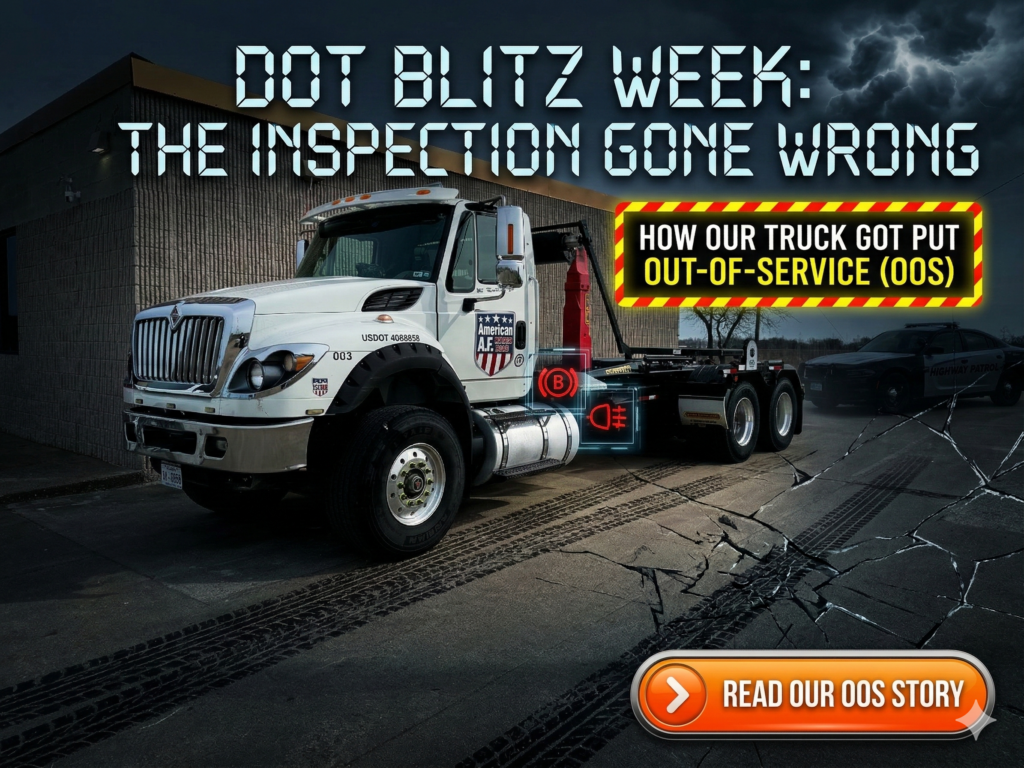
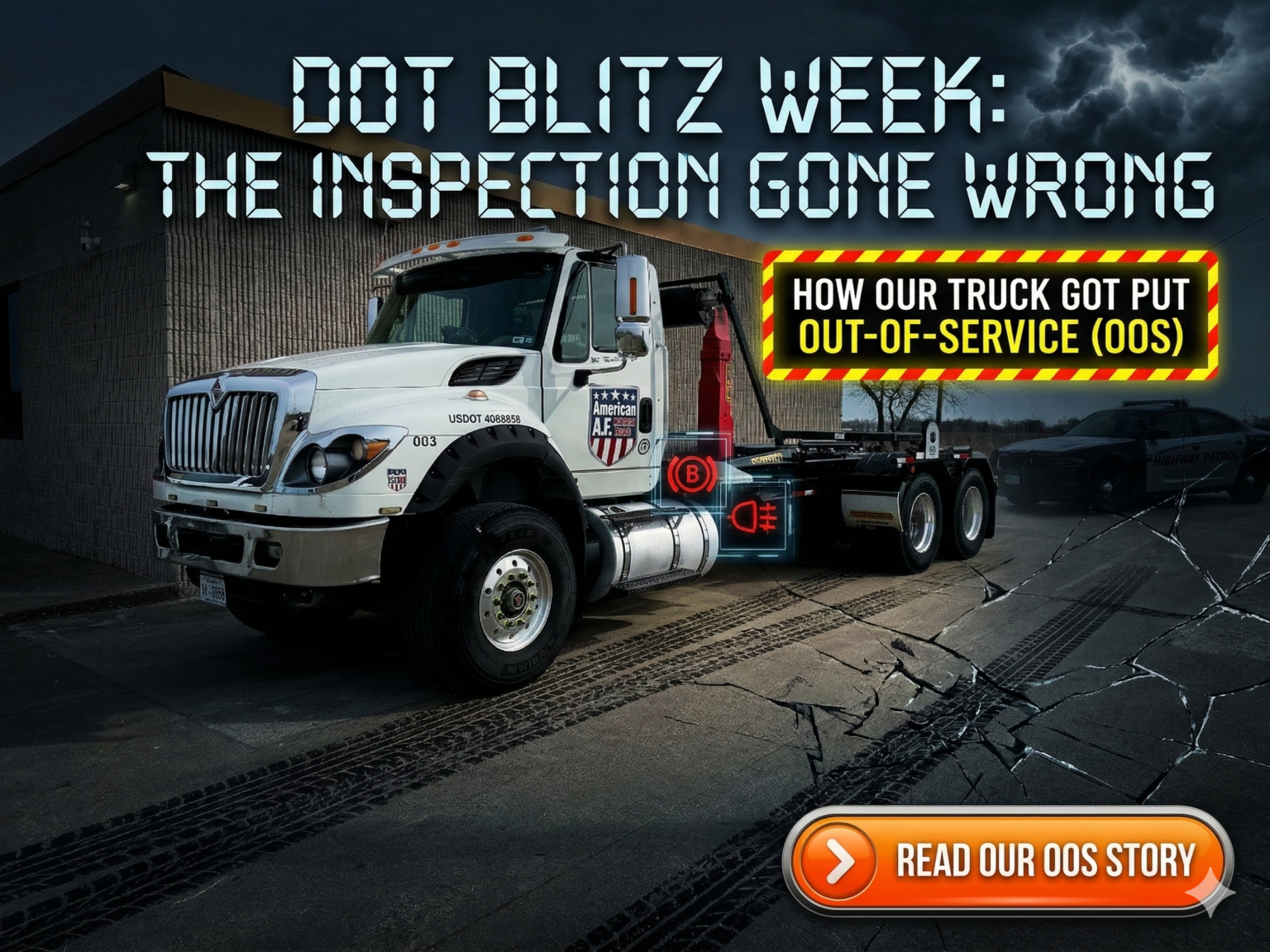
That does not mean I ignore compliance. I carry commercial auto insurance, general liability insurance, and I make sure my trailer lights, brakes, and tires are in good shape. If you get pulled over and your equipment is falling apart, that is a different conversation entirely. DOT number or not, you need to operate safely. For more on what can go wrong with inspections, read my post on DOT inspections gone wrong.
What About Other States?
If you are operating outside Texas, do not assume the same rules apply. States like California, Colorado, and New York have stricter requirements. Some states require DOT numbers at much lower weight thresholds, and some require state-specific registrations on top of the federal USDOT number. The best move is to check your state’s Department of Transportation website or call them directly before you start operating.
I have also had viewers from states like Florida and Georgia confirm that their requirements are different from Texas. This is not a one-size-fits-all answer, and anyone who tells you otherwise is oversimplifying it.
Bottom Line: Do Your Homework
The dumpster and dump trailer business is not heavily regulated compared to other industries, but you still need to know the rules for your state. In Texas, most small operators running a pickup and dump trailer for intrastate business do not need a DOT number. But the rules change if you cross state lines, haul hazardous materials, or exceed weight limits.
Do not take legal advice from YouTube comments. Talk to a DOT compliance specialist, check the FMCSA website, and make sure you are covered before you start hauling. If you are just getting started in this business, check out my guides on how to price a dumpster rental and lessons I learned the hard way.
Book a Dumpster in Dallas–Fort Worth
American AF Dumpsters provides fast, reliable dumpster trailer rentals across the DFW metroplex. Whether you need a bin for a renovation, cleanout, or construction project, we handle it. Book your dumpster rental today or call us for a free quote.