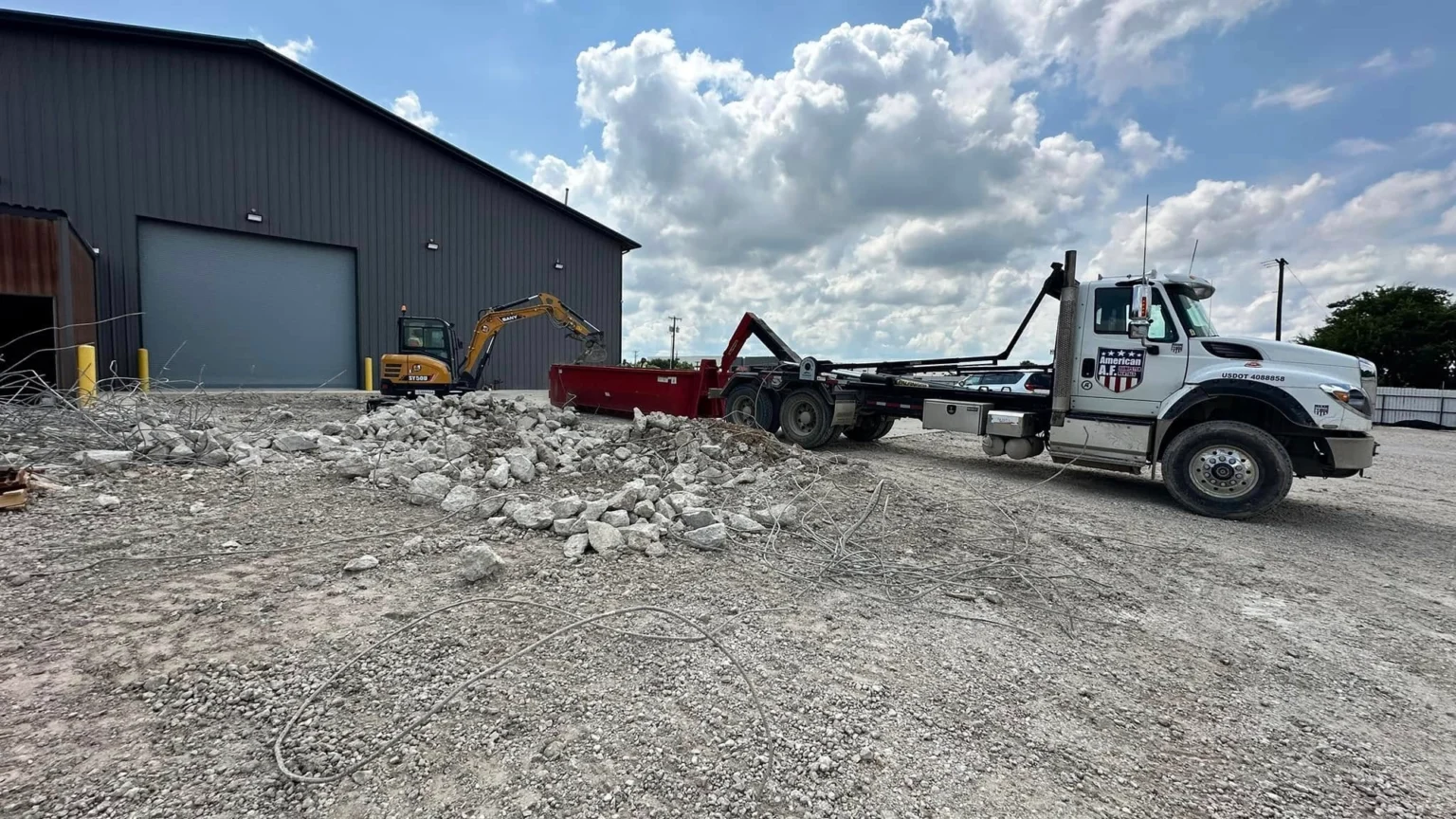
Concrete and dirt dumpsters in Dallas are built for weight. Heavy debris reaches legal road limits long before a container looks full. That is why the plan matters. You want a safe bin size, clear rules, and fast service that does not stall the crew. This guide explains how to choose the best container for broken concrete, clean dirt, rock, and sod, how much the dumpster holds in real jobs, how the price of the dumpster is set, and what local dumpster pricing looks like in Dallas. With a simple plan, you stay under limits, protect the driveway, and avoid extra charges.
Why Size Choice Matters for Heavy Debris
Heavy material is different from regular junk. A large container looks helpful but can pass legal weight even at a half fill. A small container is safer by weight but may need a second haul. The right fit saves time and money. It also lowers risk on site. Shorter walls keep the center of gravity low, make hand loading easier, and help the tarp close clean. When the size matches the debris, the driver can lift on the first try and your project keeps moving
What Counts as Clean Fill in Dallas
Clean loads unlock better rates because they can go to recycle sites. Clean concrete means only concrete. Small rebar that does not stick out may be allowed, but many routes ask for concrete without metal. Clean dirt means soil only. No roots, sod, trash, or plastic. Clean rock means only rock without dirt mixed in. If you mix materials or add trash, the load may go to a landfill at a higher fee. Before you book, ask your dispatcher how they define clean concrete, clean dirt, and clean rock for your zip code. Clear rules up front keep the invoice simple.
Key Factors Before You Book a Heavy Bin
Size and truck limits
Ten yard heavy bins are the most common choice in Dallas because they match safe haul weights. Some routes allow a twenty yard for concrete or dirt at a partial fill height. Your provider will give a fill line. Stop at that line even if there is space left. That is how you pass the scale and avoid a refused pickup.
Material type and moisture
Dry concrete is heavy. Wet soil is very heavy. Rain pushes soil weight higher in a single night. Cover loose piles and close the tarp when storms are coming. Moisture control keeps your load under the included tons and keeps local dumpster pricing on budget.
Load rules and contamination
Clean loads cost less than mixed loads. If you want recycle pricing, do not add wood, plastic, or trash to concrete or dirt. If you need to combine dirt, rock, and concrete, ask for a mixed heavy rate so the driver knows where to take the bin. Good sorting saves money.
Rental window and swaps
Most heavy jobs are quick. A driveway or patio can finish in a day. Standard pricing in Dallas usually includes about a week. If your schedule slips, ask for the daily rate to extend. For large slabs or big digs, plan one swap in the middle of the work so the crew never waits.
Access and placement
Pick a flat pad close to the work. Keep cars, trailers, and loaders out of the approach. Heavy bins are hard on surfaces. Put thick boards under the rails on new concrete or soft asphalt. Check for tree limbs and lines above the pad so the trailer can lift safely.
How Capacity Works for Concrete and Dirt
For heavy debris, weight is the true limit. A ten yard can look half empty and still be at legal road weight. Think about capacity in two parts. First is the physical space in cubic yards. Second is the allowed tons on your route. Your dispatcher will tell you the included tons, the price per extra ton, and the safe fill height. Keep the top flat and under the rail. A tight, even load passes a pickup check on the first visit and makes your day easier.
Dumpster Size Guide for Dallas Heavy Projects
| Bin Sizes: | Used For: |
| 10-Yard Dumpster | Broken driveways, patios, walkways, footings, and small digs. Short walls make loading safe. Easiest size to keep under legal haul weight for concrete and dirt. |
| 20-Yard Dumpster | Large grading or pool soil if you watch height and tons. Always confirm the line and weight for your route. |
| 30-Yard Dumpster | Not for concrete or dirt. These sizes are meant for light debris. Heavy loads in large bins can exceed legal limits even when they look far from full. |
Dallas Rules and Practical Local Tips
You can usually set a heavy bin on a private driveway without a city permit. Street placement may need a right of way permit. Ask before delivery so the driver does not have to return. Keep the weather in mind. North Texas storms add water weight to soil and make concrete slippery to handle. Close the tarp when you leave for the day. In communities with an association, check placement hours and time limits in the driveway. Many properties ask that the bin be removed as soon as the job is done. Clear steps like these avoid delays and keep neighbors happy.
How to Load Concrete and Dirt the Right Way
Break large slabs into pieces that stack flat. Set the first layer tight on the floor of the bin. Fill gaps with smaller chunks so air pockets stay small. If rebar is allowed, cut it flush so no ends stick out. If rebar is not allowed, remove it before loading. For dirt, shake off roots and keep sod out of clean loads. Load from front to back so weight is even. Leave space at the door for the gate to close. Close and tarp at the end of each shift so rain and wind do not add weight or scatter fines.
Real World Plans that Work in Dallas
A typical two car driveway often fits one ten yard heavy bin when pieces are broken and stacked flat. Thick slabs or beams can require a second haul. A patio and walkway tear out often fits a single ten yard with room to spare if brick and stone are cut to size. Small foundation work usually fits one ten yard, but rebar may need cutting to meet route rules. Yard grading or planter removal can fit one ten yard clean dirt load when roots and sod are kept aside. Pool digs and major soil work do best with several ten yard hauls or a twenty yard at a partial fill line to control total weight.
Pricing Basics and How Quotes Work
Heavy debris pricing has a few key parts: base rate, included ton allowance, price per extra ton, and swap rate. Clean concrete and dirt often have lower rates since they can be recycled, while mixed heavy loads may cost more. Distance to disposal and fuel can also raise the total. To compare pricing fairly, ask each provider for the same details: base price, included tons, extra ton rate, swap rate, and daily rate after the first week. The best value is the plan that keeps you within weight limits and avoids delays.
If you also have light debris from a remodel, consider using a ten yard heavy bin with a twenty yard light debris bin. Many Dallas providers offer bundle rates that reduce overall cost and help prevent overweight fees.
Delivery and Loading Quick Checklist
- Clear a flat twelve by twenty five foot pad, place two thick boards under the rails, and give the truck a straight approach of about sixty feet with open sky above
- Keep the top flat and below the rail, close the tarp when you stop work, and cover soil if rain is in the forecast to control moisture and weight
Frequently Asked Questions for Dallas Concrete and Dirt
What size is best for a concrete driveway tear out?
A ten yard heavy bin is the safest choice for most two car driveways in Dallas. Break panels into pieces that can be stacked flat. If the slab is thick or reinforced across a large area, plan for one swap so the crew does not wait and the load stays under the limit.
Can I combine clean dirt and clean concrete to save a haul?
Combine only if you are paying a mixed heavy rate. If you want recycling pricing, keep materials separate. Clean concrete only or clean dirt only will qualify for the lower rate. Mixing them changes the disposal site and often the fee.
How high can I load concrete or soil in a heavy bin?
Your dispatcher will give a fill line for heavy material. Stop at that line even if the container looks like it has space left. Heavy debris hits legal road weight early. A flat top under the rail with even weight helps the driver tarp and lift on the first try.
Do I need to remove rebar from broken concrete?
Rules vary by route. Some allow small rebar as long as it does not stick out. Others require concrete with no metal. Ask before you start cutting so you follow the right rule and keep the load accepted at the proper site.
How are heavy loads weighed and billed?
The truck is weighed on a certified scale when entering and leaving the disposal site. The difference is your net tons. If the net is under the included allowance, you pay the base rate. If it is over, the extra tons are billed at the quoted rate. Clear numbers on the quote help you plan your cut sizes and swap timing.