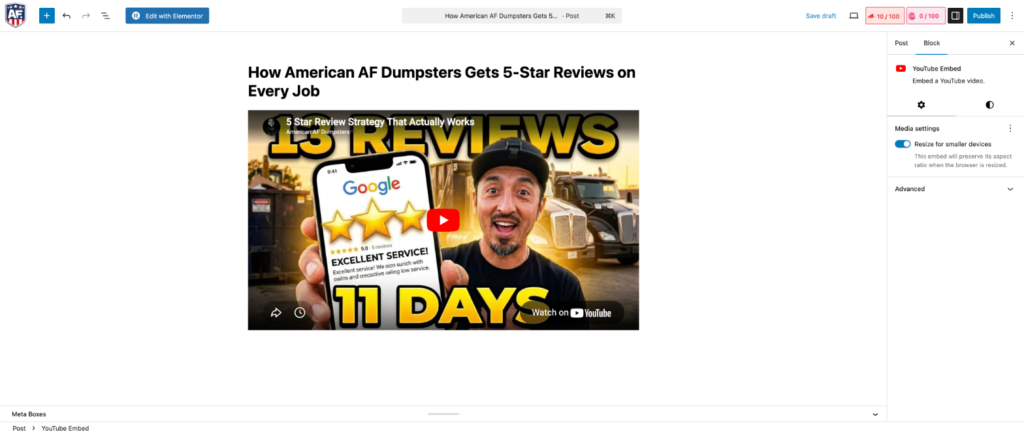
One of the most common questions I get from people starting in the dumpster business is: how do you price your dumpsters? I made a whole video breaking this down, and in this post I am going to walk you through exactly how I think about pricing at American AF Dumpsters here in Dallas-Fort Worth.
Why Pricing a Dumpster Rental Is Not One-Size-Fits-All
Here is the honest truth: my pricing is probably not going to work for 95% of you. Everyone’s overhead is different. Fuel costs, landfill fees, insurance, truck payments, and labor vary wildly by market. A dumpster operator in California is dealing with a completely different cost structure than someone here in Texas. So you cannot just copy somebody else’s prices and expect it to work. You need to know your own numbers.
That said, I am going to tell you exactly how I do it at American AF Dumpsters. I have been a business owner since I was 18, and while I am not a financial advisor, I have figured out a method that keeps the lights on and the trucks rolling.
Step 1: Know Every Single One of Your Expenses
Before you can price a single dumpster, you need to write down every expense your business has. I mean everything: truck payment, insurance, fuel, landfill fees, yard rent, software like iCANS for dispatching, phone bill, marketing costs, maintenance, and tires. Every dollar going out the door needs to be on paper. I use a simple spreadsheet. Once I have my total monthly overhead, I divide it by the number of dumpster rentals I expect to do in a month. That gives me my cost per rental before I even think about profit.
For example, here in DFW my landfill minimum is about one ton. Some places I pay a minimum of one and a half to two tons just to get in the gate. That is a fixed cost I have to account for on every single load. If you are in an area where landfill fees are lower, your pricing can reflect that. If your landfill charges are higher, you better be building that in or you are losing money every time you dump.
Step 2: Add Your Labor and Profit Margin
Once you know your cost per rental, you need to layer on what you want to pay yourself for labor and what your profit target is. I figure a typical dumpster drop and pickup takes me about two to two and a half hours total. If you value your time at $30 an hour, that is about $75 in labor per rental. On top of that, I want to see $225 to $300 in profit on each dumpster. If I cannot make that number work at the price I am charging, I need to either adjust my costs or raise my rates.
Step 3: My Actual Pricing Structure in DFW
Here is what I charge at American AF Dumpsters as a starting point. Keep in mind these are base prices and the final number can change depending on debris type, weight, and distance. My 15-yard dumpsters start at $395 plus tax and a 5% fuel surcharge. My 20-yard dumpsters start around $450 to $475. Larger containers like 30-yard and 40-yard bins scale up from there. That fuel surcharge does not cover the entire fuel bill but it helps offset the swings when diesel prices jump, which as any operator knows, can happen fast.
I also charge overage fees if customers go over the included weight. For example, most of my residential dumpsters include two tons. If you go over, there is a per-ton overage charge. Heavy materials like concrete, dirt, and roofing shingles always cost more because the landfill charges me more for that weight. If you want more detail on sizing, check out my post on dumpster sizes explained where I break down 15, 20, 30, and 40 yard containers.
Step 4: Research Your Competition
I tell every new operator the same thing: call every dumpster company in your area and get quotes. I am not saying you need to be the cheapest. You do not want to be the cheapest. But you need to understand the market you are operating in. Use Google, Yelp, and even the big national guys to get a feel for what prices look like in your area. If everyone else is charging $400 for a 15-yard and you come in at $500, you better have a reason for it, like faster delivery times, better customer service, or included weight that the other guys charge extra for.
Two important signals to watch: if nobody is booking with you and people keep shopping elsewhere after hearing your price, you are probably too high for what you are offering. On the flip side, if you are sold out constantly and turning away work, you are leaving money on the table and need to raise your rates.
Step 5: Use Technology to Track Everything
Something that has made a huge difference in getting my pricing right is using tools to track fuel and expenses. I use GasBuddy to find the cheapest fuel in the area, and I use Canva to create professional-looking marketing materials without spending a fortune on a designer. For dispatch and invoicing, I run everything through dumpster rental software that tracks each job, each load, and each payment. That data is gold when it comes to adjusting your pricing throughout the year. If you want to learn more about the software side, read my breakdown of iCANS dumpster rental software.
The Biggest Pricing Mistake New Operators Make
The number one mistake I see is people pricing too low because they think being the cheapest will get them the most business. It might get you volume, but volume without profit is just working yourself to death for free. You end up burning through trucks, burning through tires, and hating the business six months in. Price yourself so that every time you drop a dumpster, you are excited about the money you are going to make on that job. If you are not excited to deliver it, your price is too low.
The other thing to keep in mind is contractor pricing versus residential pricing. Contractors bring repeat volume and can fill your schedule, but they also negotiate harder. Residential customers are often one-time jobs but they are willing to pay more for reliability and good service. I like having a mix of both, but you need different pricing strategies for each. The contractor gets the volume discount; the homeowner pays the retail rate.
Bottom Line: Do the Math and Own Your Numbers
Pricing a dumpster rental comes down to knowing your expenses, understanding your market, and valuing your own time. Write down every cost. Research your competition. Set a price that makes you profitable on every single load. Then track your numbers so you can adjust as fuel prices, landfill rates, and demand change throughout the year.
If you are just getting started in the dumpster business, check out my guide on how to start a dumpster rental business the right way. And if you need a dumpster in Dallas-Fort Worth, call American AF Dumpsters. We will get you the right size at the right price, and we do not play games with hidden fees.